

MIND Diet vs. Ketogenic Diet: Which Supports Better Brain Health?
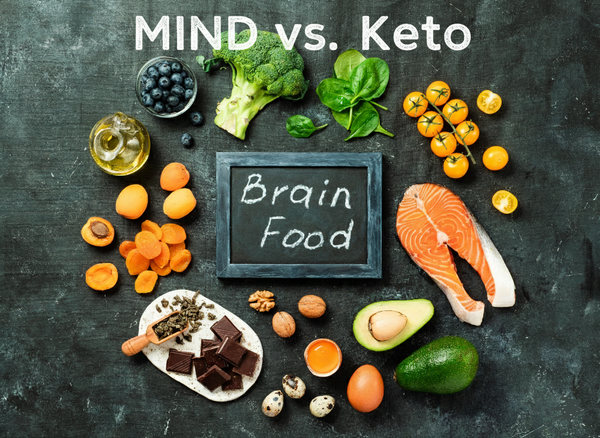
It’s time for those New Year’s resolutions to start eating better, and of course you want to stay mentally sharp for as long as possible. Diet is not a preventative cure for dementia, but there is strong scientific evidence showing that how you eat can meaningfully influence cognitive aging. Two patterns dominate current discussions: the MIND diet, which has the strongest research backing for long-term cognitive protection, and the ketogenic diet, which has shown short-term cognitive effects in specific studies but lacks large-scale prevention data in healthy adults.
In this article, I’ll examine what each diet actually looks like in real life, what the scientific evidence shows regarding long-term brain health for those who are trying to improve both metabolic health and dementia risk, and how weight loss fits into the picture, if that’s also part of your goal.
What Science Shows About Diet and Dementia Prevention
Dozens of large, long-term studies have evaluated how diet affects cognitive aging. The most consistent findings across major research institutions — including Harvard and Rush University — are that the MIND diet, which emphasizes vegetables, whole grains, berries, nuts, fish, beans, and olive oil, are associated with significantly lower risk of cognitive decline and Alzheimer’s disease.
Strict low-carbohydrate or ketogenic patterns have not been studied as long-term dementia-prevention strategies in healthy adults. However, they are starting to be researched more for brain health; so far, the promising research into these diets comes primarily from short-term trials in people who already have mild cognitive impairment or Alzheimer’s disease.
For someone with no diagnosed cognitive condition, the only evidence-supported long-term dietary pattern for dementia risk reduction is the MIND diet (and close relatives such as the Mediterranean diet). Ketogenic approaches remain experimental in this context, and more study is needed.
The MIND Diet: What You Eat and What You Limit
The MIND diet — short for Mediterranean Intervention for Neurodegenerative Delay — was specifically designed to slow cognitive aging. In large observational cohorts, high adherence has been associated with up to a 53 percent lower risk of developing Alzheimer’s disease, and even moderate adherence with about a 35 percent lower risk.
Core foods emphasized on the MIND diet
• Leafy greens: spinach, kale, collards, romaine; at least six servings per week.
• Other vegetables: focus on variety daily.
• Berries: especially blueberries and strawberries; at least twice per week.
• Nuts: five or more servings per week.
• Olive oil: primary cooking oil.
• Whole grains: oats, brown rice, quinoa, whole wheat; three servings per day.
• Beans: lentils, chickpeas, black beans, kidney beans; at least three servings per week.
• Fish: fatty fish such as salmon, sardines, mackerel, trout; at least once per week.
• Poultry: chicken or turkey; at least twice per week.
• Optional wine: up to one glass per day if you already drink; not a requirement.
Foods limited on the MIND diet
• Red meat: less than four servings per week.
• Butter and stick margarine: less than one tablespoon per day.
• Cheese: less than once per week.
• Pastries, sweets, and baked goods: limited.
• Fried or fast foods: no more than once per week.
What the MIND diet looks like day to day
• A vegetable-rich plate, especially greens.
• Whole grains as the starch foundation.
• Berries several times per week.
• Regular servings of beans, nuts, and fish.
• Olive oil as the default fat.
• Minimal red meat, cheese, sweets, and fried foods.
The good news is that even partial adherence has been associated with significantly slower cognitive decline.
The Ketogenic Diet: What It Is and What You Eat
A ketogenic diet is designed to shift the body into ketosis, a metabolic state in which the liver produces ketones for energy. Research studies involving mild cognitive impairment and early Alzheimer’s disease explore ketosis because ketones can serve as an alternative fuel source (instead of glucose) for the brain.
Unlike the MIND or Mediterranean diets, which focus on food groups, a ketogenic diet is defined by its macronutrient balance. Carbohydrates are kept very low, protein is kept moderate, and the remaining calories come from fats, which becomes the primary energy source once glucose drops.
What a classic ketogenic macronutrient pattern looks like
• Carbohydrates: usually limited to 20–50 grams per day.
• Protein: moderate — enough to maintain muscle.
• Fat: fills in the remaining calories once carbs are restricted.
This does not mean unlimited fat or unlimited protein; ketosis depends on the proportion of nutrients, not unlimited intake.
Foods typically emphasized
The foods people commonly eat on keto are familiar and relatively ordinary:
• Fish and seafood.
• Chicken and turkey.
• Eggs.
• Beef and pork in moderate portions.
• Non-starchy vegetables such as greens, broccoli, cauliflower, zucchini, peppers, and mushrooms.
• Avocado, nuts, and seeds.
• Cooking oils such as olive oil or avocado oil.
• Dairy products such as plain yogurt, cheese, and cream (unless using dairy-free versions).
The appearance of meals is generally normal — often a protein source paired with vegetables and a source of fat such as olive oil, avocado, nuts, or cheese.
Foods typically limited
Because ketosis requires low carbohydrate intake, the diet drastically restricts:
• Bread, rice, pasta, and other grains.
• Most fruits except small portions of berries.
• Starchy vegetables such as potatoes, corn, and peas.
• Desserts and sugary foods.
• Beans and lentils (in stricter versions).
• Sugary beverages and most alcohol.
What keto looks like day to day
• A plate built around a protein source.
• Non-starchy vegetables as the main plant component.
• Added fats used to replace the calories normally coming from carbohydrates.
• Very limited grains, sweets, and starchy vegetables.
Most meals resemble standard dishes with fewer carbohydrates, rather than dramatically different foods.
What the science shows in humans
Short-term trials lasting several weeks to a few months have shown that:
• Some people with mild cognitive impairment or early Alzheimer’s disease show modest improvements on certain cognitive tests while in ketosis.
• These findings have not yet been studied as long-term dementia prevention for healthy adults in their 60s.
• No multi-year prevention trial exists for keto’s effect on dementia risk.
• Results in symptomatic individuals do not necessarily translate into evidence for disease prevention in those without cognitive symptoms.
Overall, ketogenic eating patterns continue to be investigated for metabolic and short-interval cognitive effects but not yet as proven long-term strategies for dementia prevention.
What the science shows in humans
Short-term trials lasting weeks to a few months have shown that:
• Some individuals with mild cognitive impairment or early Alzheimer’s experience modest improvements in certain cognitive tests while in ketosis.
• These findings have not been studied as long-term prevention in healthy people in their 60s.
• No large, multi-year prevention trial exists for keto and dementia risk.
These findings do not prove long-term benefit or disease prevention; they demonstrate short-interval effects during active ketosis, in people who already had symptoms.
What About MCT Oil and Ketogenic “Brain Drinks”?
Some studies raise ketone levels without requiring a restrictive diet, using medium-chain triglycerides (MCTs).
What MCTs are
• Fats extracted from coconut or palm kernel oil.
• Rapidly converted into ketone bodies.
• Available as MCT oils, MCT powders, and specialized ketogenic drink mixes.
Availability
• Over-the-counter, no prescription required.
• Widely sold at Amazon, Walmart, Costco, Whole Foods, Vitamin Shoppe, and many grocery stores.
Common OTC brands
• MCT oils: Sports Research, Viva Naturals, NOW Foods, Bulletproof.
• MCT powders: Perfect Keto, Garden of Life, Kiss My Keto.
Cost
• MCT oils: generally $15–$30 per bottle.
• Powders and clinical-style formulas: $25–$100 depending on brand and serving size.
Research findings
• In mild cognitive impairment and early Alzheimer’s populations, MCTs can raise ketone levels and support short-term changes in certain cognitive measures during active use.
• No prevention trials exist for healthy older adults.
Side effects
• Gastrointestinal issues (especially diarrhea and cramping), mainly with higher doses.
• Powders and emulsified products often better tolerated.
How Weight Loss Fits Into This Conversation
Many people in their 60s are trying to lose weight for overall health, metabolic health, or mobility. Weight loss itself affects dementia risk, but the best approach depends heavily on body type, metabolic status, and whether someone tends to lose weight unintentionally.
What the evidence shows about weight, metabolism, and cognitive health
• Obesity, prediabetes, and type 2 diabetes increase the risk of vascular disease and dementia.
• Intentional weight loss can improve insulin sensitivity, blood pressure, inflammation, and lipid profiles — all highly relevant to long-term cognitive health.
• Unintentional weight loss in older adults is associated with higher dementia risk, because it often signals frailty or underlying disease.
Weight loss on the MIND diet
Many people successfully lose weight on MIND or Mediterranean patterns by:
• Reducing refined carbohydrates (white flour, sweets, processed foods).
• Increasing vegetables, beans, nuts, and whole grains.
• Using olive oil in moderate amounts.
• Eating fish and poultry instead of red meat.
• Cutting out fried foods and reducing desserts.
This approach supports cardiometabolic health without restricting major food groups and without risking nutrient deficiencies.
Weight loss on ketogenic diets
Ketogenic diets reliably cause rapid early weight loss, mostly because of:
• Lower carbohydrate intake
• Reduced appetite due to ketone production
• Loss of stored glycogen and water
However:
• Keto-induced weight loss is not yet shown to reduce dementia risk in healthy older adults.
• Strict carbohydrate restriction can lead to unwanted weight loss in thin or frail individuals, which can increase overall health risks.
• Keto tends to be harder to sustain long-term, which matters for prevention.
Combining brain health and weight loss safely
Evidence from large trials supports weight loss and metabolic improvement through:
• MIND or Mediterranean diet foundations.
• Lowering added sugars and refined carbohydrates.
• Eating more vegetables and fiber.
• Maintaining adequate protein for muscle mass.
• Increasing physical activity.
• Avoiding extreme diets unless medically supervised.
This combination improves cardiovascular health — one of the strongest protectors against dementia.
Where the Evidence Leaves Us Now
The state of the research can be summarized cleanly:
• MIND diet: strongest long-term evidence for brain protection; safe, balanced, and sustainable; associated with slower cognitive decline and lower Alzheimer’s risk.
• Mediterranean diet: closely related and strongly supported; similar benefits.
• Ketogenic diet: promising short-term metabolic and cognitive findings in symptomatic individuals; no long-term prevention data yet in healthy adults.
• MCT products: raise ketone levels and show short-term cognitive signals in symptomatic groups; no prevention data.
• Weight loss: beneficial when intentional and metabolically driven; harmful when unintentional or excessive in older adults.
For someone in their 60s aiming to preserve long-term brain health, the best-supported dietary foundation in the research literature remains a MIND-style or Mediterranean-style approach, with selective and cautious use of lower-carbohydrate strategies where appropriate for metabolic health — not as proven dementia-prevention tools.
Additional Resources You May Find Helpful
• Keto Diet for Alzheimer’s? Critics Disagree on Whether It’s Healthy and Effective
• Does Intermittent Fasting Slow Cognitive Decline?
• Blood Tests and a New Promising Drug for Alzheimer’s Are Here — Here’s What You Need to Know
Don’t wait for a crisis. Educate yourself, talk with those you trust, and work with a knowledgeable attorney here at the Farr Law Firm to make your decisions official.
Ready for more insights? Find in-depth articles covering Elder Law, Estate Planning, Medicaid Planning, Incapacity Planning, Asset Protection, Advance Directives, and much more — plus resources to help you get started — on the Everything Elder Law Blog. For real-world stories from families who very happy they planned ahead, just read our Google Reviews.
